

History and Heritage of the Austin J40 Pedal Car
An overview of the origins, production, and significance of one of Britain’s most iconic pedal cars.
Origins of the Austin J40
The Austin J40 pedal car was produced in Britain during the mid-20th century and is widely regarded as one of the most iconic pedal cars ever manufactured. Conceived as a child-sized representation of contemporary Austin motor cars, the J40 combined robust construction with distinctive styling intended to mirror full-sized vehicles of the period.
The project was closely associated with Austin Motor Company and reflected post-war Britain’s emphasis on quality manufacturing, design integrity, and aspirational products for younger generations.


Production and manufacture
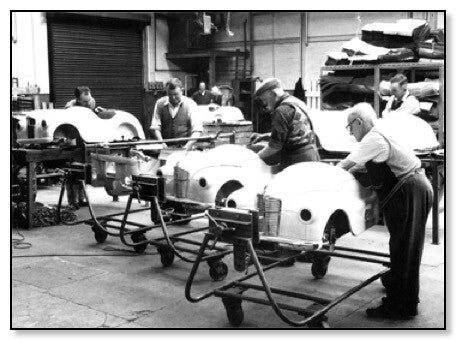
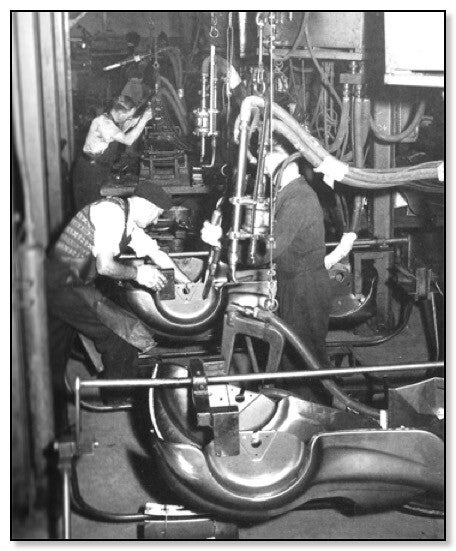
Production of the Austin J40 took place in the years following the Second World War. Manufacture was carried out using pressed steel construction, resulting in a pedal car that was notably heavier and more durable than many alternatives available at the time.
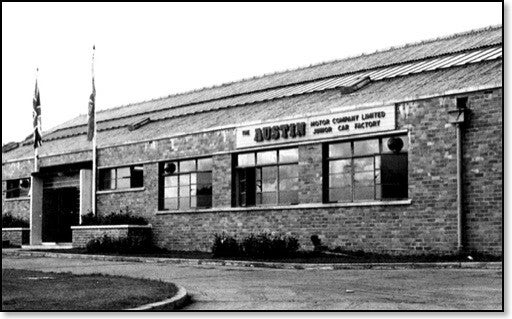
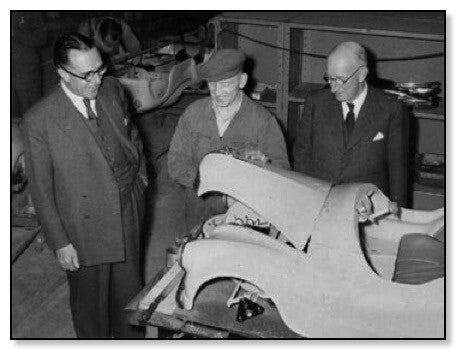
A significant and often-cited aspect of J40 production is its association with the Austin Motor Company’s factory environment, where skilled labour and industrial processes influenced both construction methods and overall quality.
Design and construction
The Austin J40 was designed to resemble contemporary Austin saloon cars, featuring a pressed steel body mounted to a substantial steel chassis.
Key design and construction features included:
- Steel body panels with formed detailing
- Steering mechanism linked to a functional front axle
- Single wheel-driven pedal system
- Rubber tyres mounted to steel wheels
- Painted finishes reflecting period Austin colour schemes

Intended audience and use
The Austin J40 was produced as a high-quality children’s pedal car rather than a disposable toy. Its construction, weight, and cost placed it firmly at the premium end of the market, intended for families seeking a durable and prestigious plaything.
As a result, the J40 often became a long-term possession rather than a short-lived childhood item.
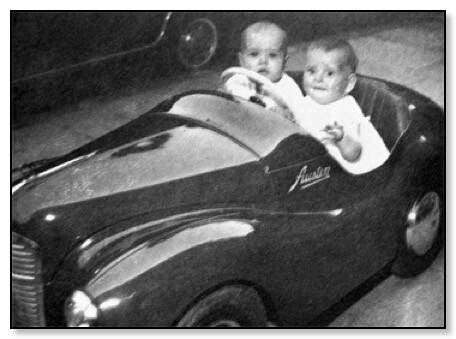
Variations and development
Over the course of production, the Austin J40 underwent various changes in detail and specification. These variations may include differences in body features, trim, pedal mechanisms, decals, and finishes.
Such changes reflect evolving manufacturing practices rather than formal model revisions and are of particular interest to collectors and restorers today.

Early (JR) J40 (1949 - one of the first in production)

Late J40 (1971 - one of the last in production)
The Austin J40 today
Today, the Austin J40 pedal car is valued as both a collectable object and a representation of mid-20th-century British manufacturing. Surviving examples range from unrestored originals showing decades of use to carefully restored cars returned to period-correct condition.
Interest in the J40 spans collectors, restorers, and enthusiasts worldwide.


Historical significance
The enduring appeal of the Austin J40 lies in its combination of industrial heritage, thoughtful design, and cultural context. As a product closely linked to Britain’s post-war manufacturing landscape, the J40 represents more than a child’s pedal car.
Its continued preservation reflects both its quality of manufacture and its place in British industrial history.
Preserving the Austin J40
Preservation of the Austin J40 requires careful consideration of originality, materials, and historical accuracy. Whether through conservation of existing components or carefully researched restoration, maintaining the integrity of these pedal cars ensures their survival for future generations.

Printable historical summary
For those wishing to retain a concise reference document, a printable historical summary of the Austin J40 pedal car is available below.
This document provides an overview of the origins, manufacture, design, and historical significance of the Austin J40 and is intended for general reference. It is supplied free of charge and may be downloaded for personal use.
Download: austin_j40_history_summary_antique_illustrated.pdf
Further information relating to Austin J40 documentation, restoration, and historical reference is available elsewhere on this site.